Case study · Girona & Salt, Catalonia
TEISA — the bus stop
that speaks Catalan… and 42 other languages.
How TEISA made the bus stops of Girona's urban network and the Salt L3 line accessible with NaviLens GO: every shelter and every pole can be heard in 42 languages.
TEISA
Operator of the Girona & Salt urban bus
Shelters + poles
NaviLens GO codes on urban bus stops
42
Languages with voice readout
Real time
Lines, destinations and next arrivals
The client
TEISA
Girona & Salt urban bus
Transports Elèctrics Interurbans, S.A. (TEISA) is the historical operator of the Girona urban bus and of an interurban network covering most of the Girona region, founded in 1924. It also runs the L3 line connecting Salt with downtown Girona.
With NaviLens, its shelters and poles stop being mere glass and vinyl: they become stops that speak — line information, destinations and next steps within reach of any traveller, in any language.
§ The challenge
Nobody left off the bus.
- 01
A network that crosses two municipalities
TEISA runs the Girona urban bus and the L3 line connecting Salt with Plaça Catalunya. Each stop combines signage from the Girona City Council, the Salt City Council and the operator itself: too much visual information for those who can't access it.
- 02
Tiny signs, reflective shelters
Line maps behind glass, line numbers on tall poles, panels glaring in the sun: travellers with low vision, older people or tourists in Catalan/Spanish/English can't always read them. A voice information layer was needed.
- 03
Spot the stop from afar
Users need to locate the shelter without having to walk up to the sign. NaviLens is detected several metres away, in motion and without aiming directly at the code.
§ The solution
NaviLens on the shelter and on the pole.
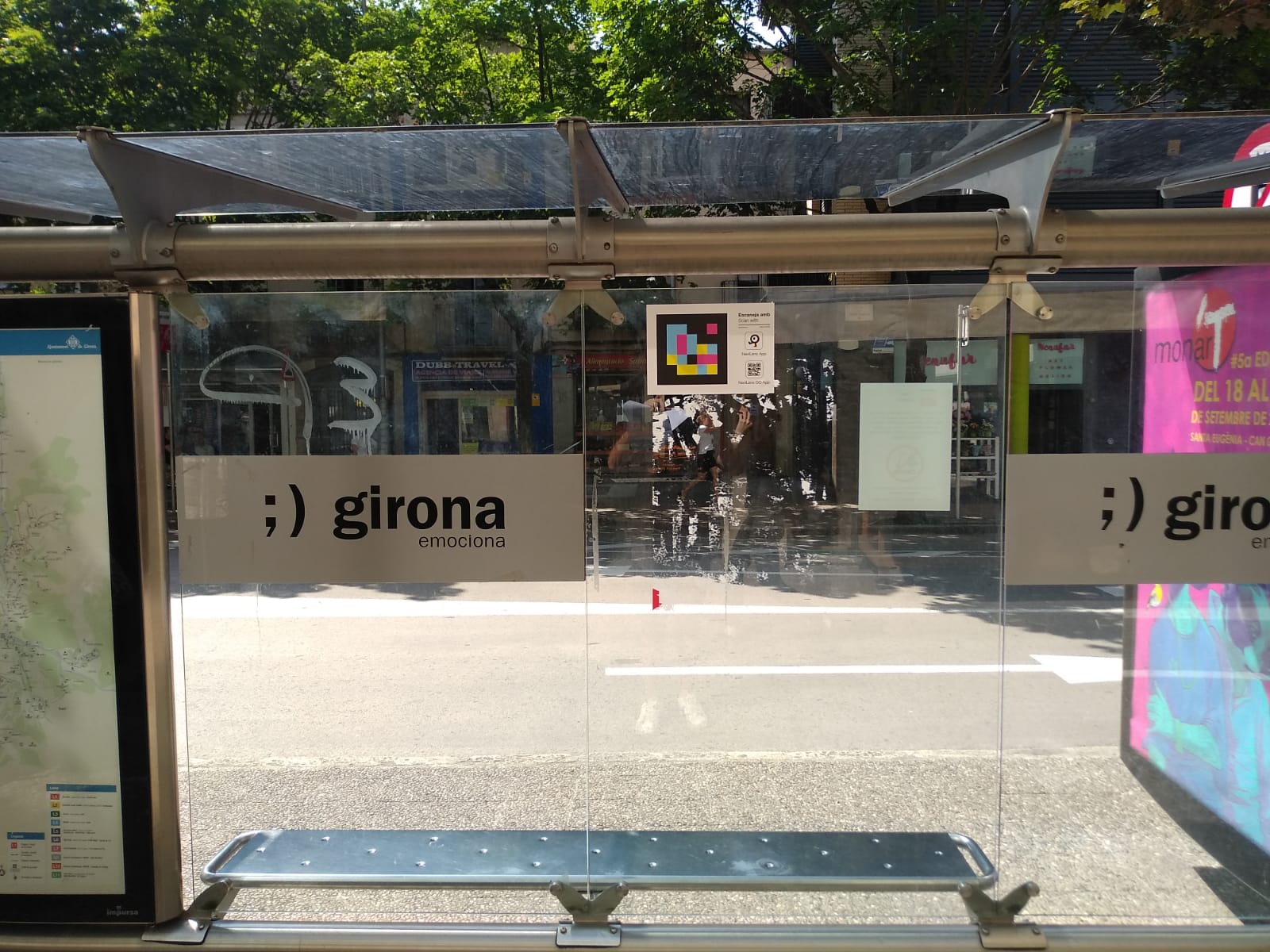
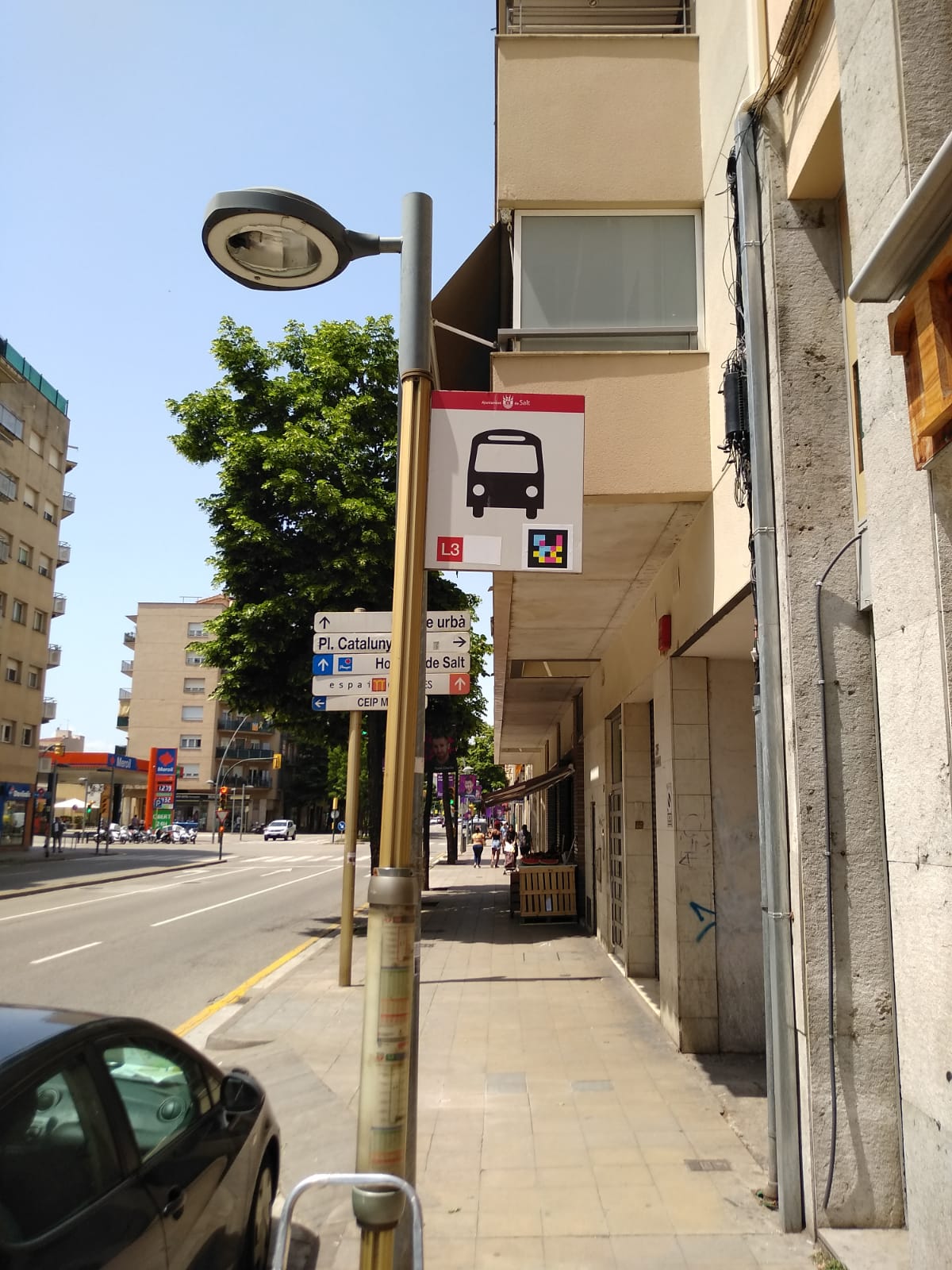
In Girona, the code sits at the height of the “girona emociona” banner on the shelter; in Salt, it goes straight onto the L3 pole, next to the line number. Same app, same gesture.
Travellers hear the stop name, the lines stopping there, the destination and service info — all in their language, even with low vision or without speaking Catalan or Spanish.
§ Timeline
From a single shelter to an accessible urban network.
- 2022
NaviLens licences for Catalan transport
Several Catalan public transport operators renew NaviLens service licences (reader and cloud) to extend the system to stops and fleet — the same system already used by TMB, FGC and TRAM Barcelona.
- Urban Girona
NaviLens code on the shelter
Girona shelters — such as the one on Carrer de Santa Eugènia · Carrer Illa — feature a NaviLens code on the glass, right next to the City Council line map and the “;) girona emociona” sign.
- Salt — L3
NaviLens code on the stop pole
In Salt, L3 stops (such as Passeig Països Catalans · Plaça Catalunya) carry the NaviLens code directly on the pole sign, next to the line number, so it can be scanned from the street.
- Day to day
Lines and arrivals in 42 languages
Travellers point their phone camera and the NaviLens GO app reads out the stop name, the lines that stop there, the destination and service info — in Catalan, Spanish, English, French, Arabic, Ukrainian… up to 42 languages.
§ Results
A bus network everyone can use.
100%
Of stop info available by voice
42
Languages — Catalan, Spanish, English, French, Arabic…
0
Visual barriers to find the right line
“A bus stop is only truly useful when everyone, in any language, knows which line stops there and where it's going.”
§ And your network?
Your next station can also speak.
Tell us about your network, your pain points and the KPIs you want to move. We’ll show you how NaviLens would fit —with comparable cases.