Case study · Alicante, Spain
Postiguet — the beach that tells itself.
How Alicante City Council made Postiguet Beach accessible with NaviLens: real-time services, occupancy, water quality and UV index in 42 languages.
Postiguet
Urban beach · Alicante, Spain
13
Access points on the promenade signposted with NaviLens
42
Languages with voice read-out
Oct 2020
First international accessible smart beach
The client
Postiguet Beach Alicante City Council
Postiguet Beach is Alicante's most emblematic urban beach, at the foot of Santa Bárbara Castle. Every season it welcomes residents, families and thousands of international tourists.
The City Council decided to make Postiguet a truly accessible beach: live, multilingual information with detailed services for people with low vision, older people and visitors who don't speak Spanish.
§ The challenge
An urban beach for everyone, in any language.
- 01
An urban beach for residents and international tourists
Postiguet is Alicante's reference beach: hundreds of thousands of visitors a year, many from abroad and many with accessibility needs. Static signage fell short.
- 02
Information that changes every day
Water status, occupancy, UV index, flag, available services… are live data points that don't fit on a printed panel, but do fit in a NaviLens code linked to up-to-date information.
- 03
Real services for people with disabilities
Adapted restrooms, amphibious chairs, the lift to Santa Bárbara Castle, Local Police and Red Cross assistance: all of it had to be findable from any access point, in any language.
§ The solution
NaviLens at every access point.
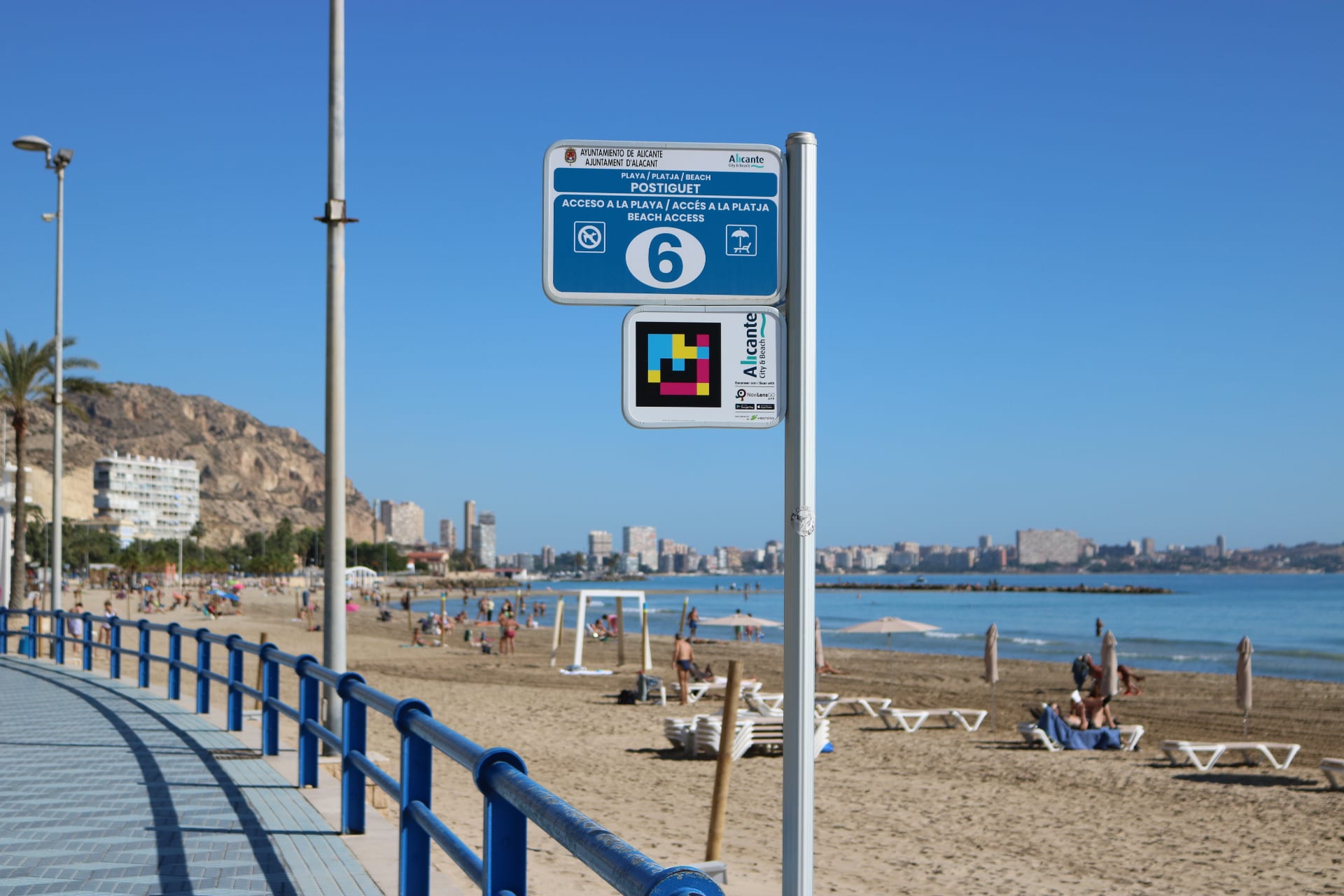
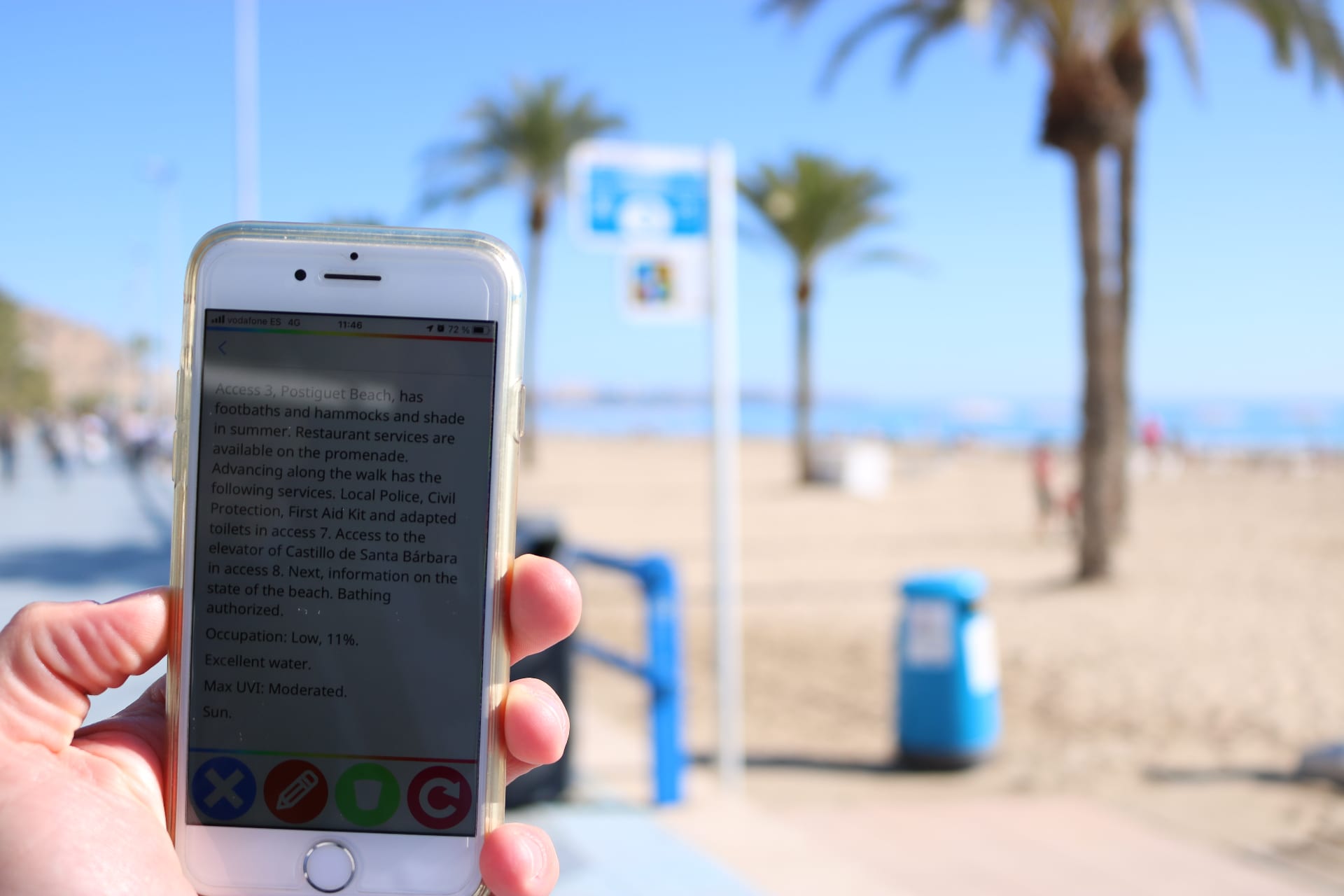
Every access point at Postiguet has a NaviLens code on its blue information post. The app detects it from several metres away and reads the available services aloud.
The information includes "footbaths, sun loungers and shade in summer", "Local Police, Civil Protection, first-aid kit and adapted restrooms at access point 7", the lift to Santa Bárbara Castle at access point 8, occupancy, water quality and the day's UV index.
§ Milestones
From an urban beach to an accessible coastal blueprint.
- Oct 2020
Smart beach launch
Alicante City Council, together with the Vectalia group, presents the installation of NaviLens at the 13 access points of Postiguet Beach, making it the first international beach accessible digitally from a phone.
- Day to day
Live information in 42 languages
Any visitor points their phone from several metres away and hears in their own language services, occupancy, water quality and the UV index of the moment.
- Blueprint
Reference accessible beach
Postiguet becomes one of the first urban beaches in Spain with real-time information accessible to people with low vision and joins Alicante's Blue Flag Special Accessibility distinction.
§ What they said
What they said at the launch.
“El Postiguet es la primera playa del mundo totalmente digital e inclusiva. Si en el siglo XXI hablamos de turismo, hay dos vías que debemos recorrer: la primera, la digitalización del destino; con la segunda, debemos avanzar en inclusión.”
“La playa del Postiguet se ha convertido en «la primera a nivel internacional» en integrar la tecnología NaviLens, que permitirá obtener información (escrita o locutada) en el móvil de los usuarios en 42 idiomas y facilitar la accesibilidad y la inclusión social.”
“Popular tourist beach on Spain's Costa Blanca claims a world digital first thanks to NaviLens technology, giving information in 42 languages to visitors with visual impairments.”
§ Results
A beach that anyone can enjoy.
100%
Of the beach access points signposted with NaviLens
42
Languages for international visitors and residents
1
Replicable model for urban beaches and coastlines
«An urban beach is only for everyone if everyone knows where the adapted restroom, the lift or the Red Cross is, in any language.»
§ And your destination?
Your destination can also guide in 42 languages.
Tell us about your routes, offices, monuments or galleries. We’ll show you how NaviLens would make your offer accessible —with comparable cases.